

REV 1.3.8 – 2026-10-06 – EN
Product manual
Manual for Slackline Webbing
Current edition: A printed or downloaded copy of this manual may have been superseded. The current edition is always at www.balancecommunity.com/pages/manuals/slackline-webbing; consult it before each use.
ISA class A+
Sewn-loop MBS basis (sewn-loop-only webbing) · per BC batch report W26DZ · ISA certification pending
ISA class · Classic —
Type C polyester — not certified by Balance Community (ISA 41 3.4.4.1.1) · per BC batch report W25EZ-CLASSIC
ISA class · Desert —
Type C polyester — not certified by Balance Community (ISA 41 3.4.4.1.1) · per BC batch report W25EZ-DESERT
ISA class · Purple —
No class · below the ISA 41 Type C minimums · per BC batch report W25HZ-PURPLE
ISA class · Black —
No class · below the ISA 41 Type C minimums · per BC batch report W25HZ-BLACK
ISA class —
Type C polyester — not certified by Balance Community (ISA 41 3.4.4.1.1) · per BC batch report W26AC
ISA class A+
Sewn-loop MBS basis (sewn-loop-only webbing) · per BC batch report W25YZ · ISA certification pending


1 Welcome
The following manual is to be used in combination with the illustrations in each section.
Only the techniques that are not crossed out or shown with a skull and cross-bones should be used. All techniques shown with the above illustrations are expressly forbidden and may result in severe injury or death.
Please regularly check for updates and new information on this product at our website: www.balancecommunity.com. Please do not hesitate to reach out with any questions or concerns.
Thank you for your purchase! We hope you enjoy your new Slackline Webbing! We appreciate your trust and interest in Balance Community's products and do hope you can get much use out of them.
Please take the time to go through this manual to familiarize yourself with this webbing. There are a number of nuances and specific use-cases that are important to know about before trusting your life to this webbing.
If you ever have any questions about your product and/or how to use it, please feel free to reach out to us at the contact information at the end of this manual.
- The Balance Community Team
2 Specifications
2.1 Strength Specifications
| Webbing | Spec MBS | Batch MBS | Sewn Loop MBS | Batch |
|---|---|---|---|---|
| Axiom MK2 | No value | No value | 46.85kN | W26DZ |
| Blue | 26kN | 29.1kN | 25.57kN | W25PZ |
| Feather PRO | 26kN | 27.68kN | 25.48kN | W24DZ |
| Green | 26kN | 29.32kN | 26.72kN | W24SZ |
| Green 20 | 30kN | 30.92kN | 24.47kN | W24AG |
| Jelly PRO · Classic | No value | 25.42kN | 21.8kN | W25EZ-CLASSIC |
| Jelly PRO · Desert | No value | 23.93kN | 23.05kN | W25EZ-DESERT |
| Mantra MK4 | 40kN | 40.8kN | 33.73kN | W25AI |
| Paradigm MK2 | 22kN | 25.38kN | 22.54kN | W26AM |
| Paradigm Signature · Purple | No value | 21.06kN | 18.68kN | W25HZ-PURPLE |
| Paradigm Signature · Black | No value | 20.64kN | 18.63kN | W25HZ-BLACK |
| Pharaoh | 26kN | 28.95kN | 24.55kN | W24XZ |
| Secondaire MK2 | No value | 24.49kN | 23.21kN | W26AC |
| Silk 99 | No value | No value | 35.89kN | W25YZ |
| Spider Silk MK5 | 30kN | 33.79kN | 31.32kN | W2551 |
The Spec MBS is the catalog specification of each webbing.
The Batch MBS and the Sewn Loop MBS are those of each webbing's current production batch; a webbing produced in a separate batch for each colorway is listed once per colorway, with that colorway's batch. The batch code links to that batch's report, which lists every break test behind the figures.
The Batch MBS and the Sewn Loop MBS are the average recorded breaking force minus 3 standard deviations (3σ) of that batch's break tests, as ISA 41 sets out in section 10.5.1 for the webbing and in section 11.5.1 for the sewn loop. Axiom MK2 and Silk 99 are classed on their sewn loops: their webbing MBS was not tested independently of the loop, so only the Sewn Loop MBS is stated. A webbing with no released batch report shows its catalog values and no batch code; where a batch did not measure a figure, the catalog value is shown.
UHMWPE-based (HMPE) webbings are not suitable to be used with webbing anchors and grips. Axiom MK2 and Silk 99 are both UHMWPE-based and as such, should not be used with webbing anchors or grips.
2.2 Other Specifications
| Webbing | Width | Thickness | Weight | Material | Weave structure | Country of manufacture | ISA class |
|---|---|---|---|---|---|---|---|
| Axiom MK2 | 18.4mm | 2.5mm | 31g/m | 100% UHMWPE | Flat | China | A+ |
| Blue | 24.7mm | 2.4mm | 56g/m | 100% PES | Flat | Taiwan | B |
| Feather PRO | 25.4mm | 2.3mm | 55g/m | 95% PES, 5% PA | Flat | USA | B |
| Green | 24.7mm | 2.8mm | 55g/m | 100% PA | Flat | USA | B |
| Green 20 | 19.1mm | 3.5mm | 53g/m | 100% PA | Flat | USA | A |
| Jelly PRO · Classic | 25.4mm | 3.7mm | 57g/m | 100% PES | Tubular | France | ‡Type C polyester, not certified · W25EZ-CLASSIC |
| Jelly PRO · Desert | 25.4mm | 3.7mm | 57g/m | 100% PES | Tubular | France | ‡Type C polyester, not certified · W25EZ-DESERT |
| Mantra MK4 | 25.3mm | 3.3mm | 76g/m | 100% PES | Flat | USA | A+ |
| Paradigm MK2 | 24.8mm | 2.5mm | 49g/m | 100% PA | Tubular | Taiwan | C |
| Paradigm Signature · Purple | 25.3mm | 2.2mm | 42g/m | 100% PA | Tubular | USA | ‡below Type C · W25HZ-PURPLE |
| Paradigm Signature · Black | 25.9mm | 2.2mm | 42g/m | 100% PA | Tubular | USA | ‡below Type C · W25HZ-BLACK |
| Pharaoh | 19.8mm | 2.7mm | 52g/m | 100% PES | Flat | USA | B |
| Secondaire MK2 | 20.0mm | 2.5mm | 44g/m | 100% PES | Flat | Taiwan | ‡Type C polyester, not certified · W26AC |
| Silk 99 | 18.9mm | 1.6mm | 20g/m | 100% UHMWPE | Flat | USA | A+ |
| Spider Silk MK5 | 20.5mm | 2.6mm | 44g/m | 95% LCP, 5% UHMWPE | Flat | China | A |
ISA 41 type derived from each webbing’s current BC batch report (webbing MBS and sewn-loop MBS against ISA 41 section 3.4); a sewn-loop-only webbing is classed on its sewn-loop MBS (ISA 41 5.2.2.1). ‡ No class: the batch tests below Type C, or the webbing is Type C polyester, which Balance Community does not certify (ISA 41 3.4.4.1.1).
Width, thickness and weight are those measured on each webbing's current production batch where the batch recorded them, otherwise the catalog value. Material and weave structure are catalog values.
Balance Community tests its webbings following the methods of ISA 41 and publishes the results as batch reports. ISA certification of these webbings is pending. Until it is granted, the ISA class shown is derived from each webbing's current batch report (webbing MBS and sewn loop MBS) against the strength classes of ISA 41 section 3.4, and is marked as derived.
Note
No ISA class is stated for Jelly PRO, Paradigm Signature and Secondaire MK2Jelly PROParadigm SignatureSecondaire MK2: the batch-report figures do not meet the minimum strength of ISA 41 Type C, the webbing is a Type C polyester that Balance Community does not certify, or no batch report has been released yet.
3 Nomenclature
- Webbing. Available in any length from 1 meter to 1,000+ meters.
- Sewn Loop - End 1 - Sleeved. A protective sleeve is added to the webbing prior to sewing. This option is preferred for any end where contact with hardware is likely.
- Sewn Loop - End 2 - Naked. No sleeve is added to the webbing prior to sewing. This option is for those that are hyper-concerned with weight and bulk within webbing-to-webbing connections.
- Stitching. The stitching for the sewn loop(s). The pattern depends heavily on the webbing type. For more information on the sewn loop for the specific webbing you have, check our website shown under Manufacturer Contact.
- Label. This label provides specific information about the webbing (see Sewn Loop Tag Nomenclature for more info). If the webbing has at least 1 sleeved sewn loop, it will be added to that end of the line. If both ends are naked, the label is added to one of the loops.
4 Sewn Loop Tag Nomenclature
- Balance Community Logo & Company Name
- General Warnings
- Manual and ISA icons — shown here with the generic ISA APPROVED mark; a certified webbing’s tag carries the ISA label for its own strength class (A+, A, B or C), and uncertified webbings carry none
- Recommended maximum service lifetime for this webbing, in days exposed to the elements / days in use (ISA 41 Annex C)
- Webbing Model Name
- MBS and Sewn Loop MBS
- Piece Length (hand written)
- Batch Number (hand written)
- Date of manufacture in YYYY.MM.DD format (hand written)
- Piece ID, left blank for the user to fill in. Used to identify specific piece of webbing, if many are owned from same batch
5 Stretch
| Webbing | ISA stretch at 5 kN | ISA stretch at 10 kN |
|---|---|---|
| Axiom MK2 | 1.3% | 2.1% |
| Blue | 2.3% | 6.4% |
| Feather PRO | 2.9% | 10.9% |
| Green | 6.9% | 11.2% |
| Green 20 | 6.2% | 10.4% |
| Jelly PRO | 4.1% | 8.5% |
| Mantra MK4 | 1.5% | 3.7% |
| Paradigm MK2 | 11.5% | 17.5% |
| Paradigm Signature | 12.8% | 19.4% |
| Pharaoh | 2.1% | 9.5% |
| Secondaire MK2 | 2.5% | 5.5% |
| Silk 99 | 1.3% | 2.1% |
| Spider Silk MK5 | 2.2% | 3.3% |
Elongation at 5 kN and 10 kN is measured with the ISA 41 elongation method (section 9: 1 kN pretension, 200 mm gauge length) on a production batch of the webbing, and applies to every colorway of it.
The full stretch curve of each webbing, measured using our preferred stretch testing method, is on that webbing's product page: follow the webbing's name in the table above. The method is described in our "Webbing Stretch Testing Methods" article in Slack Science.
New webbings were used in each of these stretch tests. Please note that humidity, moisture, age, usage, and exposure to the elements can change the stretch behavior of slackline webbings. The data above is to be used for informational purposes only and should not be taken as fact for how your webbing will stretch at any moment in time. We provide this data to give our customers a means to compare the stretch of all our webbings.
6 Guarantees and Warranties
Limited Warranty: for one year following purchase to the original buyer. We warrant that our products are free from defects in material and workmanship. Excluded from this warranty are normal wear and tear, modifications and changes, as well as damage caused by misuse.
A full recall is only applicable to new and unused products.
7 Warning
Safety:
- Activities that involve the use of the Slackline Webbing are inherently dangerous and carry a significant risk of injury or death that cannot be eliminated.
- It is the user's responsibility to obtain specific training and to use it safely. These instructions DO NOT tell you everything you need to know.
- Do not use unless you can and will understand and assume all risks and responsibilities for all damage/injury/death that may result from use of this equipment or the activities undertaken with it.
- Any device is subject to failure: carefully check before and after each use.
- You must always have a backup: never trust a life to a single tool.
- Everyone using this equipment must be given and thoroughly understand the instructions and refer to them before each use.
- You must have a rescue plan and the means to implement it. Inert suspension in a harness can quickly result in death!
- Do not use around electrical hazards, moving machinery or near sharp edges or abrasive surfaces.
- Balance Community, LLC is not responsible for any direct, indirect or accidental consequences or damage resulting from the use of our products
- Neither the manufacturer nor the vendor can be held liable for direct or indirect physical, property, consequential or collateral damage arising from the use of this device. Use this device at your own risk!
Warning:
Adhere to the Working Load Limit (WLL) of your system
A slackline system is only as strong as its weakest component. Its working load limit is set by the lowest-rated part in the load path – anchors, connectors, webbing lockers, sewn loops and the webbing itself – and by how each is configured and used. Determine the WLL of the whole system before rigging.
DO NOT EXCEED THE WLL OF YOUR SYSTEM
8 Intended Use
The three intended ways to terminate one end of the webbing are shown in Fig. I under Webbing Anchoring.
Slackline webbing is meant for walking on and should only be used with energy absorbing systems (such as dynamic anchoring materials, energy absorbers, etc...) and slack must be kept out of the system to prevent high impact falls. It is intended for use by medically fit, specifically trained and experienced users. The device is only suited for attaching oneself to a highline with a tether.
The user is responsible for the surveillance of the operating and working load.
Warning:
When combining this product with other components, the safety aspects of the Components may interfere with each other. It is up to the user to determine if the combination of components is safe, according each components design and instructions.
9 Storage, Transport, Care, and Lifespan
Avoid contact with heat, abrasive and sharp objects, corrosive substances or solvents. Wash the webbing after contact with salt water or sand. Wash with clean water and if necessary, add a small amount of neutral soap to remove persistent dirt or sand. If the Slackline Webbing is damp or wet, leave it out to dry in shade or away from direct heat sources.
Moisture, ice, salt, sand, mold, snow, chemicals and other factors can prevent proper operation or can greatly accelerate wear.
Check all parts for deformation, corrosion, wear, etc. Verify that the individual fibers along the length of the Slackline Webbing are free from breaks, abrasions, and lacerations that could potentially reduce the strength and lifespan. Regularly inspect and monitor your system, confirming proper connections, equipment position, fully locked connectors, etc.
Repairs or Modifications to any part of the Slackline Webbing are not permitted and only allowed by the manufacturer or those authorized in writing by the manufacturer.
The lifespan of the Slackline Webbing greatly depends on the usage. In extreme cases, the Slackline Webbing can be retired after the first use. Monitor your device and pay close attention to how much use it has gotten.
Retire the Slackline Webbing from service and destroy it if it is significantly loaded beyond the WLL in any configuration, does not pass inspection or there is any doubt about its safety, is misused, altered, damaged, or exposed to harmful chemical. Consult the manufacturer if you have any doubts or concerns.
To transport and/or store your slackline webbing, put it in a secure bag either flaked or coiled nicely. Avoid packing hardware or sharp objects in the same bag as the webbing to prevent any accidental damage.
10 General Warnings
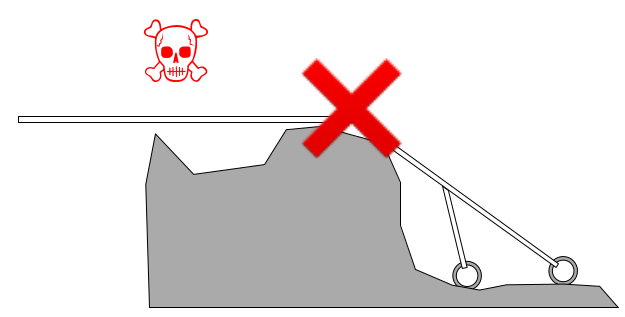
Safety: Avoid allowing your slackline webbing to touch any sharp edges on rocks, trees, edges, or anything else that may damage the webbing while it's rigged. A tight slackline webbing is particularly susceptible to being damaged by sharp edges/objects.
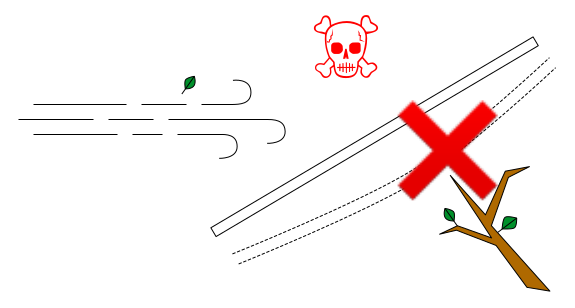
Safety: Be aware of high winds when your slackline rigged. Wind can cause excessive damage by itself, but also can cause your webbing to rub up against other sharp objects. Be sure you have a large amount of space around your line when rigged to allow for movement with high winds without interacting with other objects.
11 Webbing Anchoring
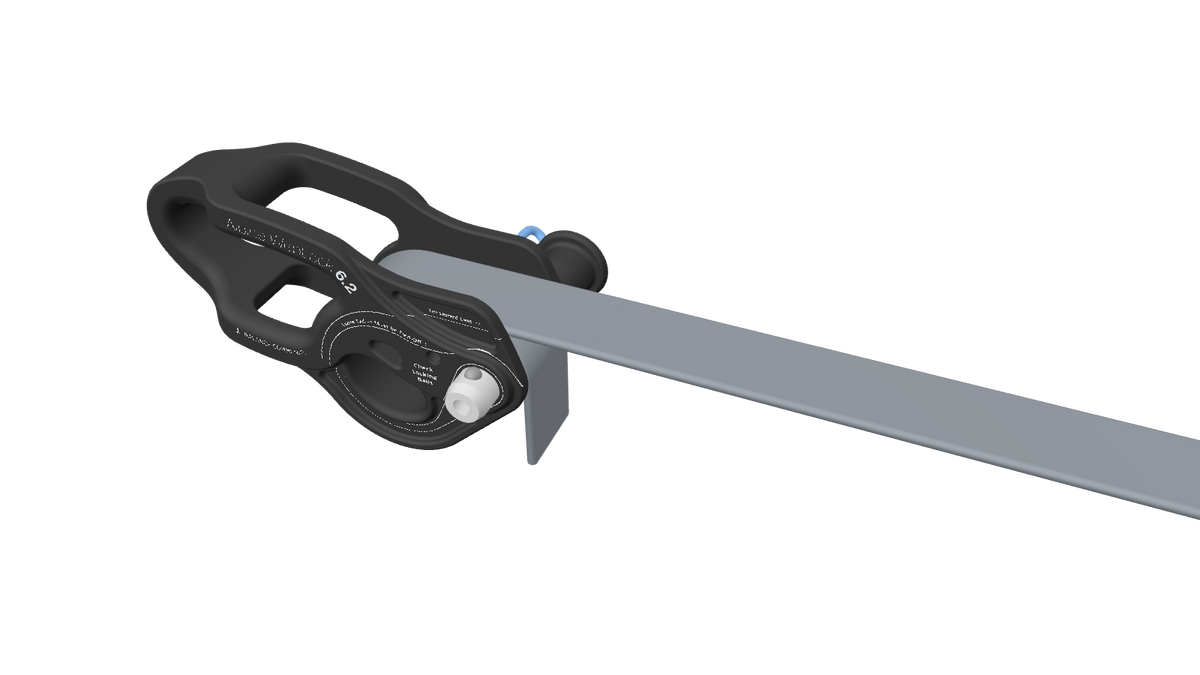
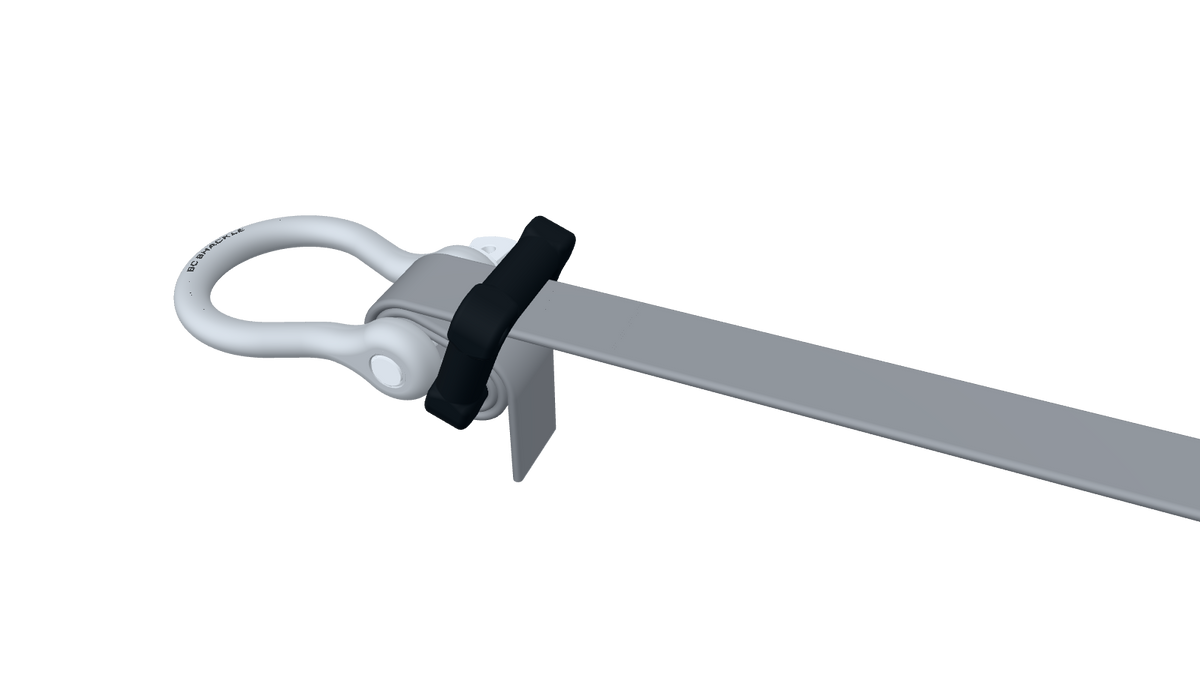
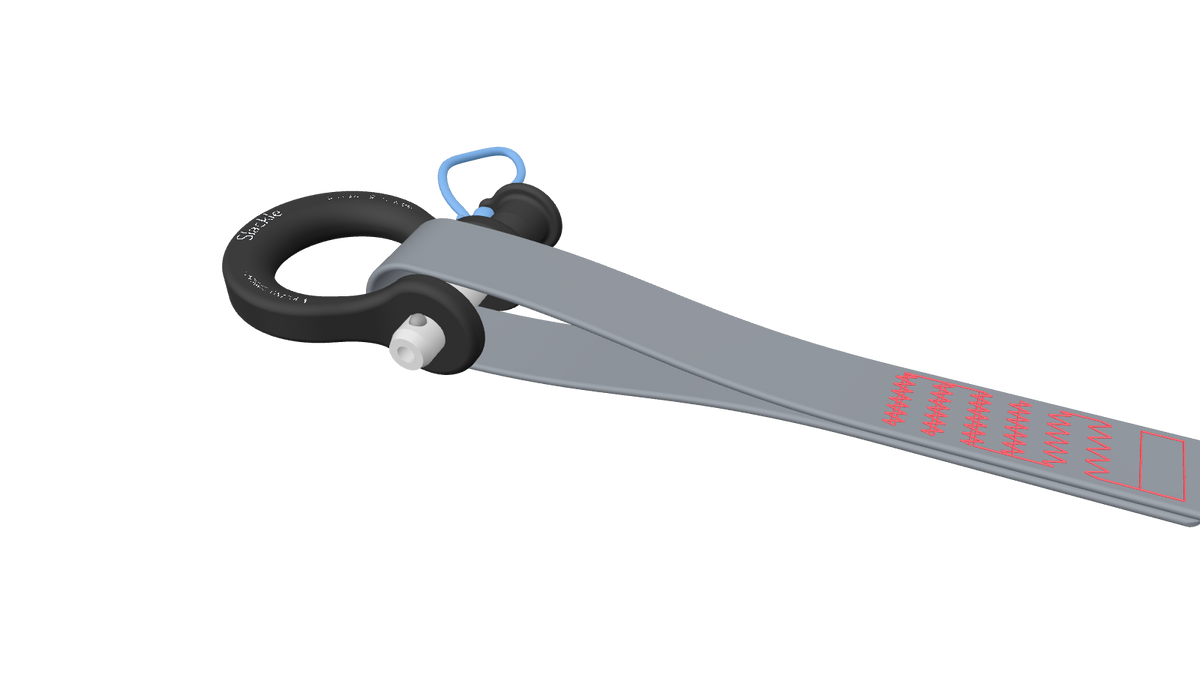
Fig. I — Left: webbing locker (Alpine WebLock 6.2). Centre: MightyLock on a shackle. Right: sewn loop on the pin of a shackle.
To anchor the Slackline Webbing, you must use a standard webbing locker, as defined by ISA:51 (weblock), or the provided sewn loops. If using the sewn loop, anchor it to the pin side of a shackle, as shown in Figure I above on the right side. Do not attach the sewn loop to a carabiner, or any other type of connector outside of ISA Approved Connectors.
If you plan to use a standard webbing locker, follow the loading instructions for that specific webbing locker. Be sure to tie off the webbing after tensioning is complete, as defined in the webbing locker instruction manual.
Safety
Be Aware of your Webbings Material Type
Different webbings perform differently in webbing lockers. Most notably, high tech webbings made with Dyneema or HMPE (UHMWPE) fibers have been known to slip well below the WLL of the webbing locker and webbing. In this manual that applies to Axiom MK2 and Silk 99Axiom MK2Silk 99.
Do not use webbing lockers with Axiom MK2 and Silk 99Axiom MK2Silk 99. Sewn loops are the only allowed termination for these webbings; anchor them only with the provided sewn loops, as described above.
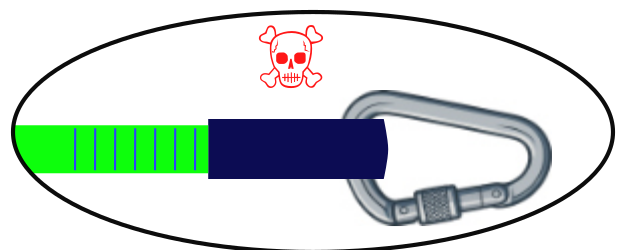
Safety: DO NOT use a carabiner to anchor the sewn loop on your slackline webbing. Only use approved shackles for this connection. Carabiners (according to EN 362 or EN 12275) are not approved for highline use.
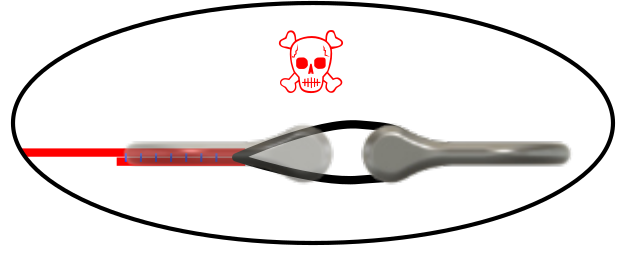
Safety: DO NOT pull in both directions on the sewn loop. Pulling towards the sewing can cause the stitches to rip open. Only pull away from the stitches.

Safety: DO NOT cross load the sewn loop! Pulling on the loop in this manner can rip open the stitches. Pull only in one direction away from the stitching.
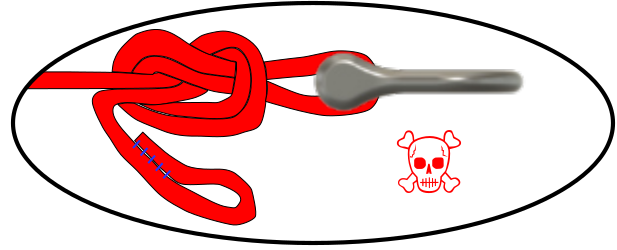
Safety: DO NOT tie your webbing in a knot to anchor it. Use the provided sewn loops or an approved webbing locker.
11.1 Webbing grabbing devices
Webbing grabbing devices (grips) hold the webbing by friction. A grip that is not suited to the webbing can slip or damage the webbing. Only use a grip that its manufacturer approves for the width and material of your webbing, and follow that grip's instructions and load limits. Do not use grips on UHMWPE-based webbings. The grips listed as compatible with each webbing are on that webbing's product page.
12 Webbing Usage Lifespan
The lifespan of your slackline webbing depends on a few key things:
- The ISA Class of the webbing
- How often it is used
- How hard it is used
Below is the ISA Recommended Maximum Service Lifetime (RMSL) chart to help determine the lifespan of your slackline webbing, assuming normal use.
The following chart describes the recommended maximum service lifetimes (RMSL) for webbings of different strengths and materials. These service lifetimes are to be interpreted as “days exposed to the elements / days in use” and NOT as the literal age of the webbing (date from manufacture).
| Strength class | PA* | PES* | UHMWPE | All other |
|---|---|---|---|---|
| Type C | 180 days | Only with shock absorbing mechanism - no recommendation | Not certified as single webbings | Not certified as single webbings |
| Type B | 360 days | 360 days | Only with shock absorbing mechanism - no recommendation | No recommendation |
| Type A | 720 days | Optical/haptical inspection | No recommendation | |
| Type A+ |
*with an average dose of 3000 J/m2 per day over the course of one year
Many equatorial and high altitude regions have much higher UV dosages than 3000 J/m2 average dose per day (averaged over the year). Also the dosages fluctuate massively during seasons (summer - winter), this needs to be taken into account by the user.
These numbers represent the recommended lifetimes for normal use. Intensive use (festivals, competitions, etc.) or harsh environments (strong UV, high winds, sand, salt water, etc.) can drastically reduce the lifetime of highline webbing. It is strongly recommended that webbing owners document the number of days the webbing was used for, to have a good understanding of when to retire the webbing from highline use. “No recommendation” indicates that there is not enough data to provide a general recommendation - it is up to the manufacturer to suggest a lifetime, and the end user to determine a webbing’s continued suitability.
Light grey: Only with shock absorbing mechanism - no recommendation Dark grey: Not certified as single webbings
| Webbing | ISA class | Recommended lifetime |
|---|---|---|
| Axiom MK2 | A+ | 360 days† |
| Blue | B | 360 days |
| Feather PRO | B | 360 days |
| Green | B | 360 days |
| Green 20 | A | 720 days |
| Jelly PRO · Classic | ‡Type C polyester, not certified · W25EZ-CLASSIC | No value |
| Jelly PRO · Desert | ‡Type C polyester, not certified · W25EZ-DESERT | No value |
| Mantra MK4 | A+ | Optical/haptical inspection |
| Paradigm MK2 | C | 180 days |
| Paradigm Signature · Purple | ‡below Type C · W25HZ-PURPLE | No value |
| Paradigm Signature · Black | ‡below Type C · W25HZ-BLACK | No value |
| Pharaoh | B | 360 days |
| Secondaire MK2 | ‡Type C polyester, not certified · W26AC | No value |
| Silk 99 | A+ | 360 days† |
| Spider Silk MK5 | A | 360 days† |
ISA 41 type derived from each webbing’s current BC batch report (webbing MBS and sewn-loop MBS against ISA 41 section 3.4); a sewn-loop-only webbing is classed on its sewn-loop MBS (ISA 41 5.2.2.1). ‡ No class: the batch tests below Type C, or the webbing is Type C polyester, which Balance Community does not certify (ISA 41 3.4.4.1.1).
† Balance Community recommendation, not an ISA 41 Annex C figure.
Warning
For Jelly PRO, Paradigm Signature and Secondaire MK2Jelly PROParadigm SignatureSecondaire MK2, ISA 41 gives no general lifetime recommendation for the webbing's class and material, or no class is stated, and Balance Community does not yet suggest one. It is up to the end user to determine the webbing's continued suitability: inspect it before every use and retire it as described in Storage, Transport, Care, and Lifespan.
13 Length Compatibility Chart for Highlines
Table describes the recommended webbing material and type depending on the length of the highline. The lower the stretch of the mainline webbing, the longer the highline has to be to provide enough elongation and thus force dissipation in case of a leash fall or a failure. If the system is shorter, force limiting features such as bungees according to ISA 42 have to be integrated in the highline system to provide sufficient elongation and to limit forces.
| Recommended mainline material depending on highline length | ||||
|---|---|---|---|---|
| Minimum length | 20 – 30m | 30 – 40m | 40 – 200m | > 200m |
| Nominal force | > 2kN | > 2kN | > 1kN | > 1kN |
| All Materials - with suitable shock absorbing mechanism (e.g. Bungees) | Okay | Okay | Okay | Okay |
| PAGreenGreen 20Paradigm MK2Paradigm Signature · PurpleParadigm Signature · Black | Okay | Okay | Okay | Okay |
| PESBlueFeather PROJelly PRO · ClassicJelly PRO · DesertMantra MK4PharaohSecondaire MK2 | Not recommended | Caution | Okay | Okay |
| Ultra low-stretchAxiom MK2Silk 99Spider Silk MK5 | Not recommended | Not recommended | Not recommended | Okay |
Okay Caution Not recommended The standard prints these cells as colours only, with no written key. The words are Balance Community’s reading of those colours; read them with the paragraph above.
14 Usage Log
Log each usage of your slackline webbing to have a better idea for when to retire the piece, according to the chart in Webbing Usage Lifespan.
The blank usage log tables are provided in the printable PDF edition of this manual. Download the PDF to print them and keep your log.
| User (Name & Address) | Batch Number | Piece ID | Purchase Date | Date of First Use |
|---|---|---|---|---|
| Date of Rig | Date of Derig | Description of Rig | Webbing State At Rig | Webbing State At Derig |
|---|---|---|---|---|
15 Legal Disclaimer
Balance Community, LLC is not liable for damage to the webbing or injury to yourself or other persons caused by the misuse of the Slackline Webbing - particularly when warnings and suggestions are ignored. You confirm with your purchase of this Slackline Webbing that you have reviewed these warnings and suggestions and understand them completely. If you decide to sell your Slackline Webbing, please include this safety manual with the sale.
Slacklining is an inherently dangerous activity that can lead to serious injury or death. The use of Slackline Webbing is at your own risk. You are responsible for obtaining information on the correct usage of the device. Every user assumes all risk and accepts full responsibility for any and all damage or injury that occurs from use of Slackline Webbing.
This Slackline Webbing was designed exclusively for slackline and highline use, and may not be used for other purposes. Before every use, the webbing should always be thoroughly inspected for damage or excessive wear described under Storage, Transport, Care, and Lifespan. The webbing should be retired immediately if anything questionable is found.
If you, the user, are not in a position to take full responsibility for the consequences that may arise from the use of this webbing, do not use the Slackline Webbing.
Any person under the age of 18 must have adult supervision when using the Slackline Webbing.
This manual is to serve as a basis of understanding for using the Slackline Webbing. It is not exhaustive. You are responsible for obtaining up-to-date information regarding the proper use of this product.
16 Manufacturer Contact
Balance Community, LLC
Lyons, CO USA
Website: www.balancecommunity.com
Email: info@balancecommunity.com
Phone: +1.818.527.5225
You must report any and all accidents or incidents to the International Slackline Association (ISA) through their Slackline Accident and Incident Report (SAIR) form through the following link: https://sair.slacklineinternational.org
Balance Community, LLC is an industry partner of the ISA. You can view more information about this association at their website here: https://www.slacklineinternational.org
© Balance Community LLC 2026
Revision history
| Edition | Date | Reason |
|---|---|---|
| REV 1.3.8PDF | 2026-10-06 | First edition |
Revision 1.3
- 1.3.8 Fixed: duplicate section heading and the disclaimer's cross-reference to the care section.
- 1.3.7 Added: carabiner warning (EN 362, EN 12275), mold, washing after salt water or sand, webbing grabbing devices, SAIR reporting obligation.
- 1.3.6 Lifetime and length charts are ISA 41 Annex C and Annex D, unaltered.
- 1.3.5 ISA class is derived from each webbing's batch report until certification is granted.
- 1.3.4 Stretch: ISA 41 elongation at 5 kN and 10 kN; the full stretch curves moved to each product page.
- 1.3.3 Material is stated with its composition and the ISA 41 Annex A names (UHMWPE in place of HMPE).
- 1.3.2 Strength: the Spec MBS is the catalog specification; the Batch MBS and Sewn Loop MBS are the average breaking force minus 3σ of each webbing's current batch (ISA 41 10.5.1, 11.5.1); each batch code links to its batch report.
- 1.3.1 Online edition: the manual is a web page, with a printable PDF of each edition.