Customer Login

Slack Science, the slackline laboratory

Slack Science, powered by Balance Community: Slackline Outfitters, is a blog run by Jerry Miszewski about slacklining. He offers tips and tricks to various parts of setting-up, taking down, in-depth looks at various aspects of a setup, and hints at walking slacklines.

Jerry's long history with the sport of slackline has given him a wealth of knowledge that he loves to share with his fellow slackliners. Slack Science is a place anyone and everyone to come and learn about our wonderful sport of slacklining.

All About Pulley Systems - Part 1 - Main Pulley Characteristics

Posted by Slack Science
Slack Science
Slack Science, the knowledge center for all things slackline.
User is currently offline
on Thursday, 29 September 2011 in Shopping Guides

One thing that every slackline has in common (besides Rodeo Lines) is that it has to be tensioned. One of the most common and practical ways to tension your slackline is with a pulley system. This article is the beginning of a series of articles that will go in to great depth about each component of a pulley system. In this article we will be talking about the main component of your pulley system: the main pulleys.

The main pulleys are one of the most important aspects of your pulley system as they determine your theoretical and actual mechanical advantage. The better main pulleys you have, the better your mechanical advantage will be, the easier it will be to tension your slacklines.

There are FIVE characteristics of a pulley that you should consider when deciding which pulleys are right for your tensioning system:

  1. Bearings or Bushings?
  2. Breaking Strength
  3. Weight
  4. Dimensions
    • Overall Size
    • Sheave/Tread Size
    • Anchor Hole Size
    • Becket Size
  5. Price

I will explain each of these characteristics in detail below.

Bearing or Bushing?

In general, you will notice that a pulley that uses ball bearings will spin much easier and have significantly less friction compared to a pulley which uses bushings.

A bushing (also referred to as a plane bearing or sleeve bearing) is just a sleeve made of some kind of material (typically nylon or bronze) which spins around the axle of the pulley.
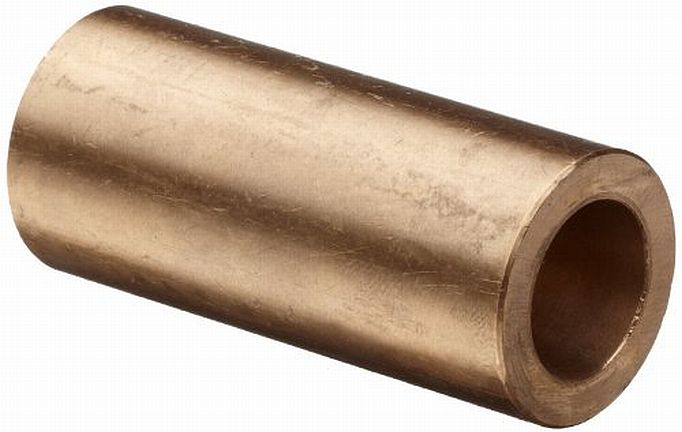
Sleeve Bearings

As you can imagine, quite a lot of the inner surface of the bushing is in contact with the axle while the pulley is spinning. This results in a large coefficient of friction, which reduces the efficiency of the bearing, which in-turn, makes tensioning your slackline significantly harder compared to using a pulley with bearings.

A ball bearing consists of three parts: the inner sleeve, the middle layer, and the outer sleeve. The middle layer is filled with machined balls which spin around the inner sleeve with the outer sleeve.

Ball Bearings

As you can see, a ball bearing has much less surface area in contact with the moving parts, thus minimizing the friction involved with tensioning a slackline. The lower the friction in your pulley system, the easier the pulling is.

Also, you will find that many pulleys come with ball bearings which are ‘sealed'. What this refers to is a plate that fits on the side of the bearing which protects the machined balls from debris (e.g. dust particles, dirt, grass, etc…). This is very important because it's extremely difficult to replace just a bearing in a pulley, so it's worth it to have this shield in place in order to protect the bearings on your pulleys.

With respect to the price of pulleys, it will always be a wise decision to spend a few extra dollars to get the pulleys which come standard with sealed ball bearings as opposed to bushings. This will enable you to reduce the effort involved with tensioning your slackline and be able to use that energy for walking the line instead.

Breaking Strength

As the limits of slacklining get pushed further and further, the loads that we are dealing with are growing at an equal rate. This means that the strength of our pulley system has never been as important. It's important to remember that the bigger our margins from the breaking strength of our pulleys, the better. On a recent 1620 ft. (494m) line that was rigged, we had a tension of 5,100 lbf on the line. This kind of load on a pulley which is rated at just 6,000 lbf would not give us much of a margin to work with. Any small fluctuation in the tension could cause the pulley to explode, which could be potentially fatal. This is why it's especially important to get pulleys which are rated well above the tensions that you are rigging to.

A good rule of thumb for looking for pulleys which are very strong is to look for companies that use the 3-sigma Minimum Breaking Strength (MBS) testing procedure. This is a method of testing which involves breaking a large sample of items, find the average and standard deviation of the breaking strength of the items broken, then rating the item at 3 standard deviations below the average. This guarantees that 99.7% of the items that come from the manufacturer will be stronger than that rated strength. One company that uses this procedure is SMC. Their pulleys (especially the 3" Double PMP's) are one of the best on the market for our purpose. They can be found in the shop here: SMC 3" Double PMP.

Weight

As our lines get longer and longer, the weight of all the gear starts to become an issue. If you are anything like me and like to slackline by yourself from time to time, bringing a large backpack full of heavy slackline gear can be quite exhausting. This is why finding a pulley which has a moderate weight is so important. The pulleys offered in our shop offer some of the best strength-to-weight ratios on the market! These pulleys also offer very high efficiency compared to other pulleys on the market.

Dimensions

There are four aspects to the dimensions characteristic of pulleys, each being equally important as the others. The first one we will look at is the overall size of the pulley.

Overall Size

Sometimes when rigging a line, you will notice that a larger pulley will get in the way of your rigging. This is more apparent on smaller lines under 100 feet in length. Having big pulleys for this size of line will make walking the line a bit harder than if you had smaller pulleys. This mainly has to do with the weight of the pulleys, but a bigger pulley is typically heavier than a smaller pulley.

Another time when the overall size of the pulley is important is if you are on an Alpine adventure where pack space is of the upmost importance. A smaller pulley takes up less room in a pack, therefore leaving you with more room for other things.

Sheave Size

The next dimension aspect that is important on pulleys is the sheave size. Often times a manufacturer will advertise that their pulley has a certain ‘sheave size'. This refers to the size of the outer part of the spinning wheel on a pulley.

Some pulleys advertise the tread size rather than the sheave size. Do not mistake this with the sheave size though because it is referring to the inner part of the rotating wheel on the pulley.

It's important to note that a pulley with a bigger sheave will have less friction than a pulley with a smaller sheave. This is due to the torque involved while pulling tension with pulleys. The further away from the center of a wheel you are, the easier it is to spin that wheel. So, with this in mind, a pulley with a 3" sheave will have 50% less friction (theoretically) than a pulley with a 2" sheave.

Anchor Hole Size

Next on the list is Anchor Hole Size. With Slacklining, it's nice to be able to fit a shackle through the anchor hole of a pulley for different rigging techniques. A lot of pulleys on the market do not have big enough anchor holes to fit even the smallest of shackles through (in any direction).

The problem with this characteristic is that no pulley manufacturers advertise the exact size of their pulleys' anchor holes. In our Shop you will find that the pulleys we carry have the size of the anchor hole listed in the technical specifications of the product.

Becket Hole Size

The last on the list of dimensions is the becket hole size. The hole at the bottom of the pulley that is cut out of the center plate of the pulley is referred to the becket hole. This is where you will typically attach your rope for your tensioning system. The size of this hole is important for using different pieces of hardware to attach your rope to your pulleys. I like to use a very small chain at this point in the pulley system because it has the lowest profile possible for such a connection. The smaller the profile of your rope connection point, the closer you can bring the pulleys together when tensioning your line. This can be important on highline rigging where the pulley system is hanging out over the edge of the cliff.

Price

Last on our list of pulleys characteristics is the price of the pulley. As with most things, you get what you pay for with pulleys. A pulley which has sealed ball bearings, is very strong, has a moderate weight, is not too big, has a large sheave, has a large anchor and becket hole will typically be more expensive than a pulley that does not have these characteristics. It's important to note that if you invest in the right pulleys from the beginning, they will last you for the rest of your slackline career, provided you take good care of them. This can save you a lot of money in the long run.



This ends the first part of this article. Next I would like to take a look at some specific pulleys and their characteristics to help you get a better idea of what you can expect when shopping for pulleys.

Rock Exotica Mini Machined Double Pulleys

Rock Exotica Mini Machined Double Pulleys
  • Bushing or Bearing? : Sealed Ball Bearings
  • Breaking Strength: 36 kN (8,093 lbf)
  • Weight: 5.0 oz. (141 grams)
  • Dimensions:
    • Overall Size: 4.0" x 2.5" x " (101mm x 63mm x mm)
    • Sheave Diameter: 1.46" (37mm)
    • Tread Diameter: 1.1" (28mm)
    • Anchor Hole Size: 1.0" x 1.0" (25.4mm x 25.4mm)
    • Becket Hole Size: 0.625" x 0.562" (15.9mm x 14.3mm)
  • Price: $75

This small pulley really packs a punch! This is definitely the strongest and most efficient pulley for it's size; excellent for smaller park lines and alpine highlines. The sideplates are CNC machined out of a solid block of Alloy 7075 Aluminum (high-grade aircraft aluminum) such that no excess material is left on the pulley.

The Anchor Hole is a nice size that can fit a variety of different connection devices. The list of connectors that I have tried so far include:

  • All types of carabiners
  • Quicklinks up to 3/4" in size
  • On the pin of 1/2", 5/8", and 3/4" anchor shackles
  • On the pin of 10mm, 12mm, and 13mm bow shackles
  • On the bow of 10mm, 12mm, and 13mm bow shackles

The becket hole on this pulley is very small. The only things that seem to fit through it are carabiners and quicklinks. This is one drawback to this pulley, but I am working on a solution.

Rock Exotica PMP 2.0 Double Pulley

Rock Exotica PMP 2.0 Double Pulley
  • Bushing or Bearing? : Sealed Ball Bearings
  • Breaking Strength: 44 kN (9,891 lbf)
  • Weight: 20.0 oz. (575 grams)
  • Dimensions:
    • Overall Size: 6.4" x 4.2" x “ (163mm x 108mm x mm)
    • Sheave Diameter: 2.375" (60.3mm)
    • Tread Diameter: 2.0" (51mm)
    • Anchor Hole Size: 1.25" x 1.00" (31.8mm x 25.4mm)
    • Becket Hole Size: 0.875" x 0.562" (22.2mm x 14.3mm)
  • Price: $100

A moderately sized pulley with pretty moderate characteristics, the Rock Exotica PMP 2.0 Double pulley is a good pulley for the money you are spending. It sports the same sort of design that the SMC 3" has with a slightly smaller sheave/tread size and not quite as strong. You will notice that these pulleys are equipped with some very high quality bearings that rotate like butter (does butter rotate?). This is especially noticeable on lines longer than 200 feet.

The anchor hole is fairly large and can fit quite a few different connectors. Here is the list of connectors that I have tried so far:

The becket hole on this pulley is the same size as the one on the Mini Machined Double, which is quite small. This limits your rope connection quite a bit.

SMC 3" Double Prussik Minding Pulley

SMC 3-inch Double Prussik Minding Pulley
  • Bushing or Bearing? : Sealed Ball Bearings
  • Breaking Strength: 60 kN (13,488 lbf)
  • Weight: 20.0 oz. (567 grams)
  • Dimensions:
    • Overall Size: 7.1" x 4.17" x 2.22" (180mm x 106mm x 56mm)
    • Sheave Diameter: 3.0" (76.2mm)
    • Tread Diameter: 2.5" (63.5mm)
    • Anchor Hole Size: 1.44" x 1.0" (36.5mm x 25.4mm)
    • Becket Hole Size: 0.875" x 0.875" (22.2mm x 22.2mm)
  • Price: $122.85

This is La Crème de la Crème in the world of pulleys. Super efficient sealed ball bearings, very high strength with a 3-sigma rating, a moderate weight for the strength and efficiency, excellent dimensions, and a price that is not so bad considering all these characteristics. The SMC 3" Double PMP's are the best pulleys you can get for your money.

The anchor hole size offers a lot of room that will fit a lot of different connectors. Here is the list of connectors I have tried with these pulleys:

The becket hole on the SMC 3" Doubles is also quite large. It will fit a range of sizes of chain shackles, which are the best for connecting your rope to your pulley system.

Here's a nice table showing the differences between the three pulleys above:

Attribute Rock Exotica Mini Machined Double Rock Exotica PMP 2.0 SMC 3" Double PMP
Bearing Type Sealed Ball-Bearings Sealed Ball-Bearings Sealed Ball-Bearings
Breaking Strength 36 kN (8,093 lbf) 44 kN (9,891 lbf) 60 kN (13,488 lbf)
Weight 5.0 oz. (141 grams) 20.0 oz. (575 grams) 20.0 oz. (567 grams)
Overall Size 4.0" x 2.5" x " (101mm x 63mm x mm) 6.4" x 4.2" x “ (163mm x 108mm x mm) 7.1" x 4.17" x 2.22" (180mm x 106mm x 56mm)
Sheave Size 1.46" (37mm) 2.375" (60.3mm) 3.0" (76.2mm)
Tread Size 1.1" (28mm) 2.0" (51mm) 2.5" (63.5mm)
Anchor Hole Size 1.0" x 1.0" (25.4mm x 25.4mm) 1.25" x 1.00" (31.8mm x 25.4mm) 1.44" x 1.0" (36.5mm x 25.4mm)
Becket Size 0.625" x 0.562" (15.9mm x 14.3mm) 0.875" x 0.562" (22.2mm x 14.3mm) 0.875" x 0.875" (22.2mm x 22.2mm)
Price $75.00 $100.00 $122.85

This concludes the first article in the 'All About Your Pulley System' series from Slack Science. Stay tuned for more articles from this series in coming weeks!

Rate this blog entry
3 votes

Slack Science

Slack Science, the knowledge center for all things slackline.
Trackback URL for this blog entry

Comments

Kyle Thursday, 13 October 2011

Wow, wish this was available 3 years ago when I was selecting a pulley system. I ended up getting a pulley with bushings instead of bearings but oh well. Thanks for condensing this info.

Mark Wednesday, 26 October 2011

i was checking out smc's site and they list the becket strength as 31 kn for the 3" double pulley... that's not breaking strength of the becket, is it??? i know it's 1/2 of the MBS, does that mean that both ends of the pulley add up to the total MBS? i thought every part of the pulley has to have the same strength... hope i didn't confuse you as much as i confused myself.

Slack Science Wednesday, 26 October 2011

Hey Mark,

The 31 kN is the 3-sigma minimum breaking strength (MBS) of the becket. This refers to the strength of the center plate of the pulley as this is the plate that the becket is located. The reason the strength of the full pulley is higher is because the anchor hole utilizes all three plates rather than just the center plate. When you pull on more plates, the force is distributed over the various plates rather than on just one like it would be if you were to only pull on the becket.

I hope this makes sense. Let me know if there is any confusion.

Mark Friday, 04 November 2011

awesome i'm satisfied with your answer, thanks again!

Austin Thursday, 01 March 2012

I know that the preferred pulley is the SMC 3" Double pulley for longline/highline set ups but I was curios about the Rock Exotica Omni 1.5 double pulleys. Would this be an adequate pulley for a 400-500 ft set up? I was thinking of purchasing two for a 5.1 system but figured I might as well purchase 4 & go straight to a 9.1 system if needed. The main difference in the two pulleys is the sheave size. I understand that the SMC's have a 3" sheave vs. the Rock Exotica's 1.5" sheave but will that greatly reduce the life of your static rope while under tension?

Slack Science Thursday, 01 March 2012

It's not so much that the sheave size will reduce the life of your static rope, but it's robbing you of much needed efficiency. I strongly suggest getting the 4-pack of SMC's as they are the best of the best. I use that system for my 1600 ft. lines without any issues, and that's not even the limit!

Shoot me an email at Info@balancecommunity.com and I can set you up with a sweet deal for the 4-pack.

Phil Sunday, 04 March 2012

Whats the difference between a pulley and a snatch block? could these be used as well?

Slack Science Sunday, 04 March 2012

Hey Phil,

A Snatch Block is defined as a block with which you can install the rope or cable at any point along the length (the sideplates are rotatable). So, by this definition, the above pulleys are snatch blocks. Typical rigging snatch blocks are extremely heavy and are built for steel cable, which makes rigging with them very cumbersome. It's best to stick with pulleys (snatch blocks) that are built for rescue situations where the weight and strength has been optimized for use with static ropes, which is what we typically use in slackline rigging.

Leave your comment

Guest Saturday, 19 May 2012

These articles take a lot of time and research. Help keep Slack Science afloat with a small donation. Every little bit helps.

Amount: 

Categories

Latest Comments

Slack Science said, I have seen line-lockers destroy low stretch webbing at tensions as low as 1/5 the breaking strength
Commented in post All About Webbing Anchor's on Wednesday, 16 May 2012
Slack Science said, The reason we use double rings is mainly for redundancy. Also, the rings that come with a line-locke
Commented in post All About Webbing Anchor's on Wednesday, 16 May 2012
Drew Sanford said, Exactly how important is it to use weblock-style devices on low stretch webbing? I know quite a few
Commented in post All About Webbing Anchor's on Wednesday, 16 May 2012
Slack Science said, Those are definitely not safe! Better would be to use stakes in the grassy area. Definitely do not u
Commented in post Safety Reminder on Tuesday, 08 May 2012
Steve said, Thats great thanks. [img]http://kathrynwarmstrong.files.wordpress.com/2011/06/4-ballintoy-harbor.jp
Commented in post Safety Reminder on Tuesday, 08 May 2012

Popular Posts

The 9:1 Base Pulley System
All About Pulley Systems - The Complete Guide
